
What Is Quiet Quitting? Signs, Causes and How to Respond
Quiet quitting is when an employee pulls back to the bare minimum without ever resigning. It spreads silently, gets noticed late, and quietly erodes engagement, productivity and culture. Here are the signs, the root causes and a data-driven way to respond.
"Quiet quitting" has become one of the most-discussed HR concepts of recent years. With post-pandemic hybrid work, burnout and shifting work-life expectations, a significant share of employees have psychologically checked out of their jobs without ever handing in their notice. This article explains what quiet quitting is, its signs, why it emerges, and how organisations can prevent it by measuring engagement with data and turning it into action. This is exactly where the Hi e-learning Employee Experience Module helps you keep your finger on the pulse continuously.
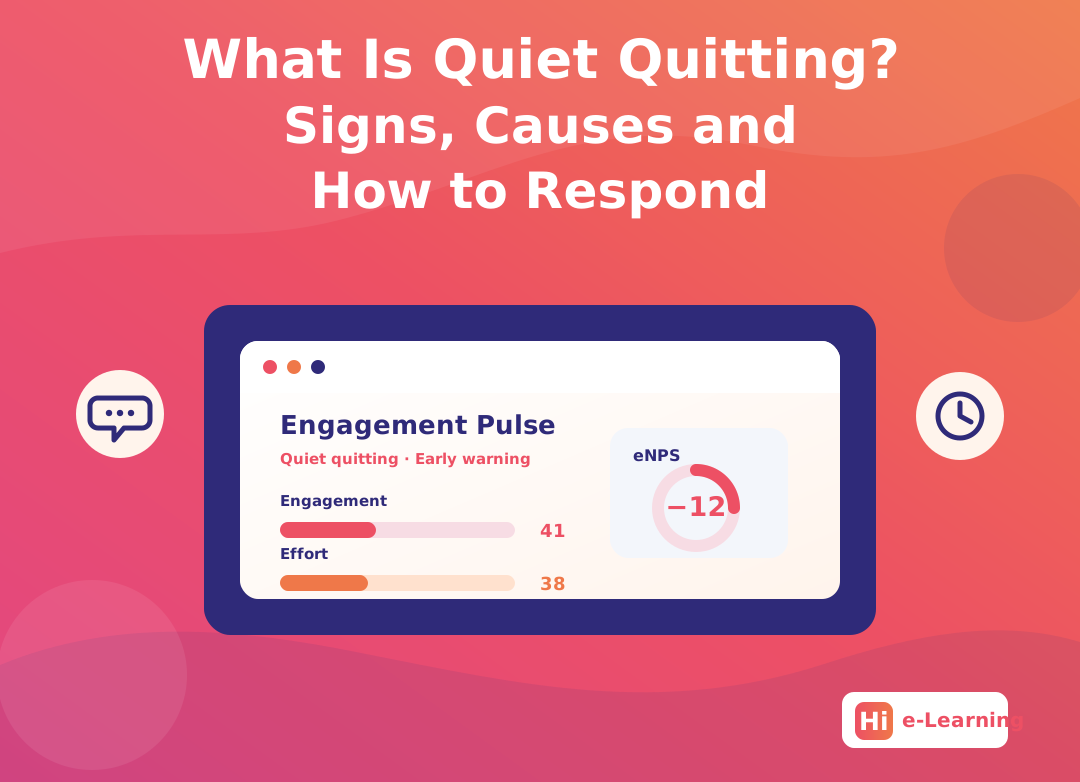
What is quiet quitting?
Quiet quitting is when an employee, without actually leaving their job, pulls back to doing only the minimum their role requires and stops the discretionary extra effort they used to give. The person still shows up, still does "enough", but withdraws the overtime, the initiative, the volunteering and the emotional investment. It is not really a "resignation"; it is a psychological withdrawal, a breaking of the bond. That is exactly why it is "quiet": from the outside it usually goes unnoticed, because the employee is still there and still appears to be "doing the job".
The concept itself is not new. In employee engagement literature it has long been known as "disengagement". "Quiet quitting" is simply the new, viral name the phenomenon was given on social media in 2022. What is new is not the phenomenon — it is its scale and visibility.
Quiet quitting is not laziness
Reading quiet quitting as "the employee being lazy" is the most common and most costly mistake. It is usually the opposite: quiet quitting is a self-protective reaction from people who once showed high engagement and went the extra mile. When these employees stop being recognised, burn out, or feel their effort goes unrewarded, they pull their effort back to "the limits of the contract". Quiet quitting is not a character problem — it is an experience problem, and the root cause usually lies not in the employee but in the system.
The signs of quiet quitting
Quiet quitting spreads silently, so individual signs are easy to miss. They deserve attention when they appear together and persist:
- Doing only assigned tasks: A growing "that's not my job" attitude and indifference to voluntary work.
- Withdrawing in meetings: Not contributing ideas, going quiet, turning the camera off, staying out of discussions.
- Less initiative: Not flagging problems, not suggesting improvements, a "I do what I'm told" stance.
- Switching off after hours: Not responding to out-of-hours communication (which can also be a healthy boundary — context matters).
- A quiet drop in productivity: Slower delivery, quality settling at "enough but no more".
- Social distance: Pulling away from team activities, informal communication and the wider culture.
- Declining scores: A downward trend in eNPS, engagement and satisfaction measures.
An important caveat: any one of these signs alone can be perfectly normal. An employee setting a healthy boundary is not quiet quitting. The real issue is when these behaviours appear together, persistently, and alongside a broken bond.
Why does quiet quitting happen? Root causes
Quiet quitting rarely has a single cause. It is usually the sum of accumulated small negative experiences. The most common root causes:
- Burnout and overload: A relentlessly high tempo pushes people into self-protection mode.
- Lack of recognition and feedback: An employee whose effort goes unseen eventually withdraws that effort.
- An unclear career path: An unanswered "where am I going here?" drains motivation.
- Perceived unfairness: A sense that pay, promotion or workload distribution is unjust damages the bond.
- A weak manager relationship: The strongest determinant of employee experience is the direct manager. Poor management is the number-one trigger of quiet quitting.
- Lack of meaning and purpose: An employee who cannot see why their work matters loses the emotional connection.
- A broken work-life balance: The pressure to be always available produces boundary-setting as a reaction.
The cost of quiet quitting
Because quiet quitting is quiet, its cost stays invisible — but it is real. Disengaged employees show up as lower productivity, declining innovation, weakening team morale and falling customer satisfaction. What is more, quiet quitting is often the precursor to actual resignation: once the bond breaks, a real departure is only a matter of time. Given that attracting talent is many times more expensive than retaining current employees, catching quiet quitting early is, directly, a matter of cost control.
How to prevent quiet quitting: 6 ways to respond
The secret to tackling quiet quitting is making the problem visible. You cannot fight what you cannot see. Here is a proven roadmap:
- Take the pulse continuously. A single annual survey is not enough. Track the engagement trend live with monthly or quarterly pulse surveys and eNPS, and catch the decline early.
- Make one-on-ones a routine. Regular, honest 1:1s are the strongest early-warning channel for quiet quitting. Steer managers toward listening.
- Balance the workload. Manage capacity transparently to prevent burnout; don't normalise a constant "emergency" mode.
- Strengthen a culture of recognition. Being seen is one of the most powerful engagement drivers. Build regular, concrete and fair recognition mechanisms.
- Offer clear career and development paths. When an employee feels "I can grow here", the bond re-forms. Make development opportunities visible.
- Turn feedback into action. Nothing wears employees down more than "we ran a survey and nothing changed". Share results, take concrete action, show the progress.
The manager's role: the antidote to quiet quitting
Research consistently shows that the strongest determinant of employee experience is not the organisation's broad policies but the direct manager. A good manager senses the team's pulse, spots withdrawal early, opens a safe space to talk, and addresses issues before they grow. So tackling quiet quitting is, to a large extent, about equipping managers with coaching leadership, listening and feedback skills. Giving managers real-time visibility of their own team's engagement scores feeds that awareness with data.
The Hi e-learning approach
The Hi e-learning Employee Experience & Engagement Module helps you catch quiet quitting early with periodic pulse measurement, a flexible survey structure, department- and title-level analytics, strong reporting and action-plan tracking. Within the Digital HR ecosystem it is designed to work alongside the Performance Management System, the Employee Offboarding Module and the Ethics Hotline Portal. That way you see the decline in engagement early, analyse it with the right breakdowns and turn the insight into action.
Conclusion
Quiet quitting is not laziness — it is a broken bond, and the root cause usually lies not in the employee but in the experience. The good news: like everything that is quiet, it becomes visible once you measure it. Measuring employee experience regularly, managing performance fairly, and genuinely turning feedback into action is the most reliable way to catch quiet quitting before it turns into real quitting.
Put a number on quiet quitting — before it's too late
Catch the drop in engagement early with eNPS, pulse surveys, department analytics and action-plan tracking — discover the Hi e-learning Employee Experience Module.
Discover the Employee Experience Module

SCORM-compliant LMS • Mobile-friendly learning • Multilingual content • HR integrations • Detailed reporting
Explore LMS Performance management Employee experience Employee offboarding Ethics hotline Corporate training solutions Custom e-learning content Request a Demo