
OKR vs SMART Goals: Which Goal-Setting Method Fits Your Company?
OKR and SMART are the two most widely used approaches to setting goals. Both are powerful, but they serve different purposes. This article explains each with examples, compares the differences, and helps you decide which to use and when.
Well-defined goals are the foundation of high-performing organisations. But “writing” goals and structuring them with the right method are two very different things. Goals that are vague, unmeasurable or disconnected from daily work lower motivation and make review cycles meaningless. This is exactly where structured methods like OKR and SMART come in. Whichever you choose, tracking them in a single Performance Management System keeps the process transparent and sustainable.
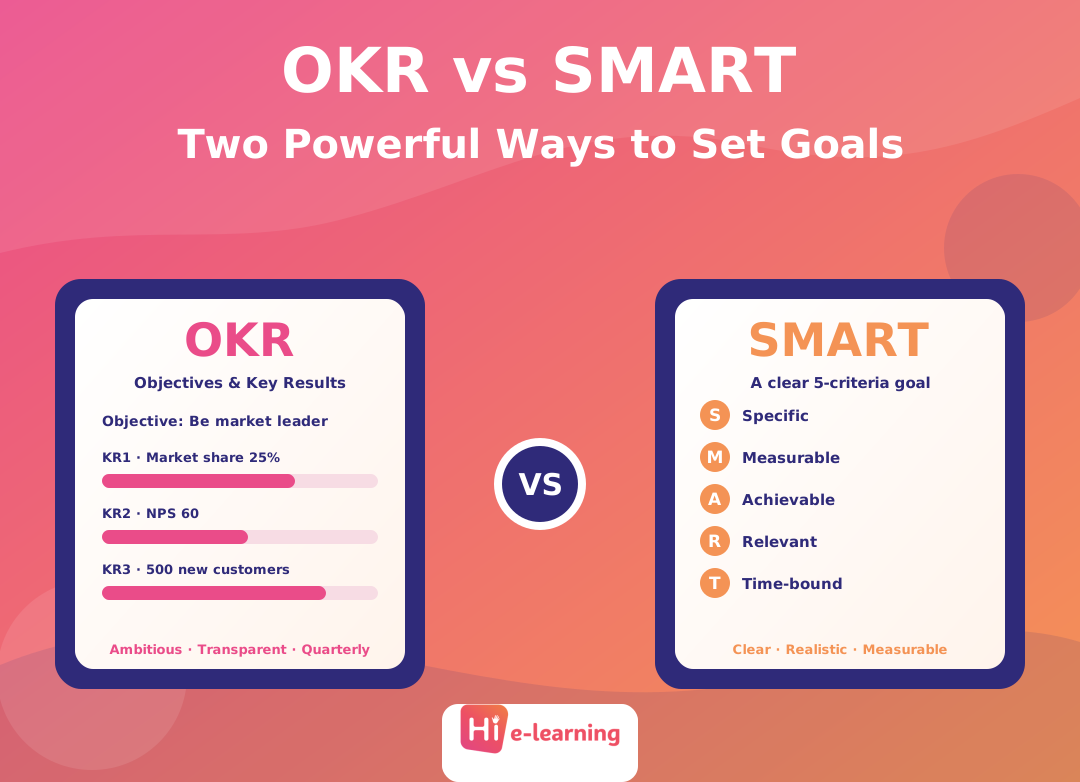
What is a SMART goal?
SMART is made of the initials of five criteria that check whether a goal is well written. To be SMART, a goal must have all five characteristics:
- S — Specific: The goal must be clear and precise. Not “increase sales” but “increase sales in the enterprise segment”.
- M — Measurable: There must be a number or criterion you can track progress against.
- A — Achievable: The goal should be challenging but realistic.
- R — Relevant: The goal should align with company and role priorities.
- T — Time-bound: There must be a clear deadline or timeframe.
SMART goal example: “Increase monthly recurring revenue (MRR) in the enterprise customer segment by 15% by the end of Q3 2026.” This goal is specific, measurable (15% MRR), achievable, relevant to the role, and time-bound.
What is an OKR?
OKR (Objectives and Key Results) is a goal-setting and alignment system that originated at Intel and was popularised by Google. It has two components:
- Objective: An inspiring, qualitative statement of where you want to go. Such as “Become the undisputed leader of our market”.
- Key Results: 2-5 measurable results that show how close you are to the objective. Such as “Grow market share to 25%”, “Raise NPS to 60”, “Win 500 new enterprise customers”.
A defining trait of OKRs is that they are usually ambitious (stretch): 100% completion is not expected; ~70% is often considered healthy. OKRs are transparent (everyone can see each other’s goals) and typically run in quarterly cycles.
OKR vs SMART: The key differences
The two methods are not rivals; they actually work at different layers. SMART is a quality framework for how a goal is written; OKR is a system for how you align and manage goals across the organisation. The clearest differences are:
| Criterion | SMART | OKR |
|---|---|---|
| Purpose | Write one goal clearly and measurably | Align goals across the organisation |
| Ambition level | Achievable, realistic | Ambitious, stretch |
| Success expectation | 100% completion | ~70% is healthy |
| Cycle | Flexible (project/annual) | Usually quarterly |
| Transparency | Usually individual | Organisation-wide, public |
| Best fit | Individual and operational goals | Strategic alignment and growth |
When should you use which?
The right choice depends on your organisation’s maturity, culture and the type of goal:
- Choose SMART: For individual performance goals, operational tasks and situations that require clear, precise outcomes; an ideal starting point for teams whose goal-setting culture is not yet mature.
- Choose OKR: For fast-growing organisations with a high need for cross-departmental alignment, ambitious growth targets and a desire to build a transparent performance culture.
Using OKR and SMART together
Treating the two methods as alternatives is a common misconception. The strongest organisations actually use them together:
- At company and team level, you set ambitious goals and alignment with OKR.
- You write each Key Result or individual goal using SMART criteria to make it clear, measurable and time-bound.
- This combines top-level direction (OKR) with execution clarity (SMART).
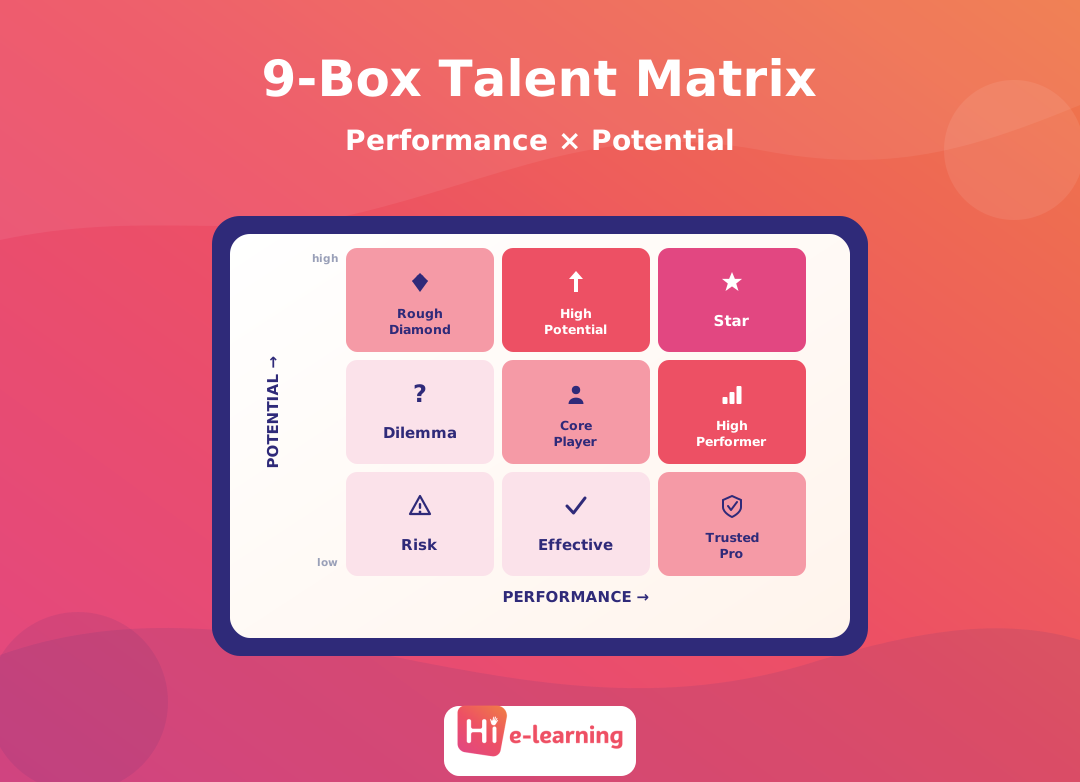
Combined with the 9-box talent matrix and regular feedback cycles, this hybrid approach makes performance management genuinely data-driven.
Tracking goals: the system matters as much as the method
Whether you choose OKR or SMART, the biggest challenge is not setting goals but keeping them alive throughout the cycle. Spreadsheets and scattered forms become impossible to track as headcount grows. A performance management system centralises goal and OKR tracking, progress updates, 360-degree feedback and reporting on one platform. That way goals become living documents that are continuously updated, not something written at the start of a period and forgotten.
The Hi e-learning approach
Hi e-learning Performance Management System supports both OKR and SMART goal structures. You can build a goal hierarchy at company, team and individual level, track progress in real time, plan review cycles, and connect results to employee experience and development actions. It all works together inside the Digital HR ecosystem.
Conclusion
OKR and SMART are two complementary, powerful goal-setting methods. SMART helps you write a goal clearly and measurably; OKR aligns goals across the organisation and drives ambitious growth. The right choice depends on your culture and the type of goal — and most often the best answer is to use “both together”. Whichever you choose, tracking goals with the right system is the decisive factor for success.
Manage your OKR and SMART goals on one platform
Discover Hi e-learning Performance Management System to run goal tracking, OKR alignment, feedback and development actions together.
Discover Performance Management
SCORM-compliant LMS • Mobile-friendly learning • Multilingual content • HR integrations • Detailed reporting
Explore LMS Performance management Employee experience Employee offboarding Ethics hotline Corporate training solutions Custom e-learning content Request a Demo